Big Dreams, Zero Action: Why Your Own Head Works Against You
Last updated: May 2026
People who dream big but never act rarely fail because of lacking ambition. Their brain rewards them during the planning phase with a sense of achievement, fear of failure disguises itself as caution, and constant overthinking burns the energy that action would actually need. Psychology identifies six concrete mechanisms that explain why potential alone is worth nothing.
I know both sides. 14 years of insolvency. Debt collectors at the door. Suicidal thoughts. And then the moment when I stopped planning and started doing. This article is not an academic essay. It is what I learned in 30 years as an entrepreneur, backed by what psychology says about it.

Table of Contents
Why Dreaming Alone Is Not Enough
Do you know someone who constantly talks about big plans? The company he is going to start. The book she is going to write. The life they deserve. Crystal clear in their head. But three years later, nothing has changed.
Maybe you are that person. I was too.
Psychology says: that is not laziness. There are six concrete mechanisms that make your brain work against you. Understand them, and you can dismantle them.
Your Brain Rewards You for Planning, Not for Doing
Just imagining success gives your brain a sense of having achieved something. That is not a metaphor. Neurologically, your brain releases small amounts of dopamine when you think about your goals. Almost as if you had already made progress.
A study by Kappes and Oettingen (2011) in the Journal of Experimental Social Psychology shows: positive fantasies about the future lower the energy available for actual implementation. The participants who vividly imagined their success took the least action.
Your brain cannot distinguish between doing something and merely imagining it. The reward comes either way. The pressure to actually start drops.
Straight talk: Every time you lie in bed at night picturing your successful business, your brain gives you a small dopamine hit. Next morning, the drive is gone. Because your brain thinks you have already delivered.
Why Fear Is Hiding Behind Your Motivation
It is not a lack of ambition. That is the paradox. The people who dream biggest often carry the greatest fear of what happens if they try and fail.
As long as you do not try, your dream stays perfect. Untouched. Flawless. The moment you start, you risk the reality looking uglier than the fantasy.
Psychologists call this self-handicapping. You sabotage yourself before you begin. Not consciously. But your subconscious protects your self-image. Because if you never started, you can always tell yourself: I would have made it if I had wanted to.
Carol Dweck from Stanford University has shown through her research on the Growth Mindset: people with a Fixed Mindset avoid challenges because they see failure as proof of lacking talent. Those who believe abilities can grow treat failure as data.

The Perfect Moment Does Not Exist
Many people believe they need to feel ready before they begin. One more course. One more book. One more week of preparation. Then I will be set.
Psychology shows the opposite: readiness comes after action, not before.
Mel Robbins captured this in her 5-Second Rule: if you do not act within five seconds, your brain kicks in and finds a reason not to. Five seconds. That is all the window you get.
In 2026 I started building my own AI agent. Not because I was ready. Not because I understood everything. I just started. The competence came from doing.
Why Overthinking Exhausts You Before You Have Done Anything
You think through every step. Every outcome. Every possibility. What could go wrong. What others will think. What the best strategy is.
That constant analysis burns real energy. Your brain uses around 20 percent of your total energy budget. If you ruminate all day, you are just as drained in the evening as after a productive workday. Except without a result.
Barry Schwartz described this in his book The Paradox of Choice: more options do not lead to better decisions, they lead to decision paralysis. The more you analyze, the less you do.
The math: If you spend 2 hours a day ruminating instead of acting, that is 730 hours a year. 91 full working days. Almost half a year. Lost to thoughts that never become results.

Why Your Identity Can Be Your Biggest Enemy
The brain resists actions that do not match your self-image. If you secretly believe: I am not disciplined or I never finish anything, your subconscious will do everything to confirm that belief.
James Clear describes this in Atomic Habits: every action is a vote for the person you want to be. When you go for a run once, you are voting for the identity of an active person. If you never do it, you are voting against it.
Action does not just require willpower. It requires becoming someone different. And that is exactly what most people fear. Not failure itself. But having to admit to themselves who they really are. How you reshape your identity on purpose and get self-discipline as a side effect, I describe in It is actually quite simple to be disciplined when you stop letting yourself get distracted.
After my insolvency on December 11, 2003 - over 22 years ago - I had to build a completely new identity. The successful forklift entrepreneur I had been no longer existed. The person lying on the floor had to decide: do I stay here, or do I become someone new?

Limiting Beliefs - The Thermostat in Your Head
Picture a thermostat set to 3. That is the temperature of your life. You can push yourself, briefly reach a 5. But as long as the thermostat sits at 3, you always fall back. Your subconscious pulls you to the level it considers normal. Like an invisible barrier surrounding you completely.
That barrier has a name: limiting beliefs.
I know what I am talking about. Growing up, my parents kept telling me: Maik, you start so many things and never finish any of them. They did not mean it badly. They said it out of concern. But my subconscious turned it into truth. A belief that burned itself so deep that it took me until I was 32 to even recognize it. Let alone dissolve it.
And that is just one of many.
The Most Dangerous Beliefs About Money
Money corrupts character. You have to work hard for money. Money does not matter. Rich people are bad people. We cannot afford that.
Do those sound familiar? Most people have carried them since childhood. They come from parents, teachers, the environment. They run like a program in the background. You do not notice it, but it steers every decision you make.
If you deep down believe money corrupts character, you will unconsciously do everything to avoid having too much of it. Because your brain wants to protect you from the 'bad character.' The thermostat stays at 3.
The Chain That Connects Everything
What you believe determines how you think. How you think determines how you act. How you act determines your results. Your results confirm your beliefs. A cycle.
Belief shapes thinking. Thinking shapes action. Action shapes results. And the results confirm the belief. If you do not break this cycle at the root - at the level of beliefs - nothing changes. You keep going in circles wondering why you always end up in the same place.
Even the Bible holds this thought. Loosely from Matthew: According to your faith let it be done to you. That is not an esoteric statement. It is a psychological reality. Your belief sets the frame for everything that follows.
How Do You Turn the Thermostat Higher?
Step one: recognize which beliefs are running in you. Not the obvious ones. The ones sitting so deep you mistake them for truths. I am not good enough. People like me cannot do this. I do not deserve that.
Step two: consciously replace those beliefs. Not with positive affirmations you do not believe yourself. With evidence. Every small action that contradicts the old belief is proof to yourself. I have helped 254,000 families with swing2sleep. That is my proof against you never finish anything.
Step three: check your environment. You are the average of the five people you spend the most time with. If those five people have their thermostat at 3, yours will not reach 7. No matter how many books you read.
Matter follows mind. What you think becomes reality.
Not through magic. Because your thinking steers your actions and your actions shape your results. Turning the thermostat higher means working at the root. At what you believe about yourself.
Why You Are Addicted to Potential Instead of Effort
Talking about big dreams feels good. Exciting. Full of possibilities. You picture who you could be. That creates a high that real work rarely delivers.
Because real progress is repetitive. Slow. Often uncomfortable. The hundredth blog post. The fiftieth customer call. The thousandth repetition. None of it feels exciting.
So you stay with the idea of who you could be. Because that feels better than facing who you actually are right now.
Angela Duckworth made this measurable in her research on Grit: talent without persistence amounts to nothing. Her data shows that perseverance correlates with success twice as strongly as talent. It is not the gifted who win. It is the stubborn.
| Dreamer | Doer |
|---|---|
| Plans the perfect start | Starts with what is there |
| Analyzes all options | Picks one and corrects along the way |
| Talks about goals | Shows results |
| Waits for motivation | Acts despite missing motivation |
| Protects self-image | Risks mistakes and learns |
| Burns energy on ruminating | Invests energy into doing |
What I Learned About Action During the Crisis
I am not speaking from theory. I am speaking from the experience of insolvency, debt collectors at the door and a moment when things were genuinely hard. But I knew I had to function. For my kids. For my wife.
In my worst phase I only planned for months. Wrote business plans. Sketched ideas. Drafted concepts. All to feel like something was moving. But nothing moved. Because I was confusing planning with action.
One of the most important pieces of advice came in 2012 from a mentor: no more TV. No news. No Netflix. No aimless YouTube. Instead: read. Every day. Your brain is a sponge. What you let in comes back out. In your language. In your thoughts. In your doing and acting. Fill the sponge with garbage, garbage comes out. Fill it with knowledge, strategy and the right stories, everything changes.
And suddenly there was time. TV off, news off, Netflix off. Even alongside a full-time job of 60 to 80 hours I had at least 10 hours a week free. Saturdays. Sundays. Early mornings. I invested those hours in my vision. Not in entertainment, but in building.
The turning point did not come through a motivational guru. It came through a simple thought: what is the worst that can happen if I start right now?
The answer: nothing worse than what I was already living through.
From that point I did everything differently. I started recording YouTube videos at over 40. I founded swing2sleep without a loan, without an investor, without a business plan. Just started. Made mistakes. Corrected. Kept going.
Today swing2sleep has helped over 254,000 families. Not because the idea was perfect. But because at some point I stopped planning and started delivering.
My daughter wrote in the podcast comments: Growing up, I never noticed a single thing about any of this. That comment got 193 likes. And it shows: even in the darkest phase, action is possible. Even when nobody sees what it costs you.
5 Tools That Helped Me Move from Thinking to Acting
The 2-Minute Rule
If a task takes less than two minutes, do it immediately. Do not write it down. Do not plan it for later. Right now. This comes from David Allen's Getting Things Done and it works because it eliminates resistance. Two minutes is not something your brain can classify as threatening.
The Smallest Next Step
Want to start a business? The next step is not a business plan. It is registering a domain. Or calling the first potential customer. Or writing one sentence that describes what you offer. Just one sentence. The rest comes after.
Public Commitment
Tell someone what you intend to do. Not the whole world. One person whose opinion matters to you. Research shows: public commitments increase the likelihood of follow-through by up to 65 percent. Because your brain hates inconsistency.
Tackle the Hardest Task First in the Morning
Your willpower is at its peak in the morning. Mark Twain put it this way: Eat a live frog first thing in the morning, and nothing worse will happen to you the rest of the day. The task you are most tempted to avoid? Do it first. Everything after feels easy.
Make Progress Visible
Your brain needs proof that something is moving. A physical board. A tally chart. A journal. Whatever works. Just make sure you see every day that you are one step further than yesterday. That visual evidence breaks the illusion that nothing is happening.
How This Article Was Made - in Under 4 Minutes
Here it gets meta. Because this article is itself proof that action costs less effort than planning.
The text you are reading right now came about like this: I recorded a voice message in Telegram. My personal AI assistant turned it into this blog article, including SEO optimization, structured data for Google and a FAQ section. At the same time it produced the video and uploaded it to YouTube.
Everything together: under four minutes. No desk. No laptop to open. No CMS. Just me, my phone and an AI agent that knows exactly how I write and what I want.
My team built this system for me. A personal AI assistant that runs on my own server, is controllable via Telegram and knows my entire business. From the website to emails to my health data.
Why do I mention this? Because it proves exactly the topic of this article. The technology is there. The tools are there. The only question is: are you doing it, or are you just planning?
While you were reading this article, my AI agent could already have written the next one. From the sofa in Cyprus. Via voice message. That is the reality of 2026. The question is no longer whether you have the tools. The question is whether you use them.
The Difference Is Not Talent
Having big dreams is nothing special. Millions of people dream big. Turning them into reality is.
The difference between those who make it and those who plan forever is not talent. Not luck. Not money. It is the ability to act, even when your own head is working against you.
Six mechanisms hold you back. Your brain rewards you for planning. Fear disguises itself as caution. You wait for a perfect moment that never comes. Overthinking robs you of energy. Your identity blocks you. And the idea of potential feels better than the hard work. If you want an honest starting point instead of waiting for the perfect moment, the Anti-Vision in How to avoid ending up like 99 percent of people is the place to start.
Now you know all of this. The question is: what are you doing in the next five seconds?

Want to know how I run my business with AI?
In my detailed article I show you my complete setup. How the AI assistant works, what it can do and what it costs.
See my AI setupFrequently Asked Questions
Why can't I follow through on my goals?
Your brain rewards you with satisfaction just from planning. That removes the internal pressure to actually act. On top of that, there is often an unconscious fear of failure. Laziness is not the problem - it is a protection mechanism in your head.
Is procrastination a mental illness?
No. Procrastination is a behavioral pattern, not a diagnosis. The cause is emotional avoidance, not laziness. People who put things off are avoiding uncomfortable feelings like fear of failure or overwhelm. That can be trained.
How do I stop overthinking everything?
Set a maximum time limit of 5 minutes per decision. Make the decision, even if it does not feel perfect. The brain confuses analysis with progress. Acting gives you more clarity than any additional hour of thinking.
What helps against fear of failure?
Failure is feedback, not a verdict. Start with the smallest possible step. The smaller the action, the lower the risk, the easier the start. And ask yourself honestly: what happens in the worst case? Usually less than you think.
Why do I feel exhausted when I haven't done anything?
Mental analysis burns real energy. Your brain uses around 20 percent of your total energy budget. If you spend all day ruminating, planning and running through scenarios, you are just as drained in the evening as after a full workday. Except without results.
Can I actually change my identity?
Yes. Identity is not a fixed construct - it is a pattern of habits and beliefs. Every new action is proof to yourself that you can be different. James Clear calls this identity-based habits: every repetition is a vote for the person you want to become.
What are limiting beliefs and how do they affect my actions?
Limiting beliefs are deeply rooted convictions about yourself and the world, often from childhood. They work like a thermostat: your life always settles at the level your subconscious considers normal. Belief shapes thinking, thinking shapes action, action shapes results.
How do I recognize negative beliefs about money?
Watch for thoughts like: money corrupts character, you have to work hard for money, money doesn't matter. If those sound familiar, you have probably carried them since childhood. They steer your financial decisions unconsciously and keep your thermostat low.
How was this article created?
Via voice message to an AI assistant on Telegram. The text, the blog article, the video and the YouTube upload. All AI-driven, in under four minutes. More on that in the article and on my page about AI for entrepreneurs.
When I change, the world changes.
Be the change.
Stop planning. Start doing. Your future self will thank you.
All the best, Maik
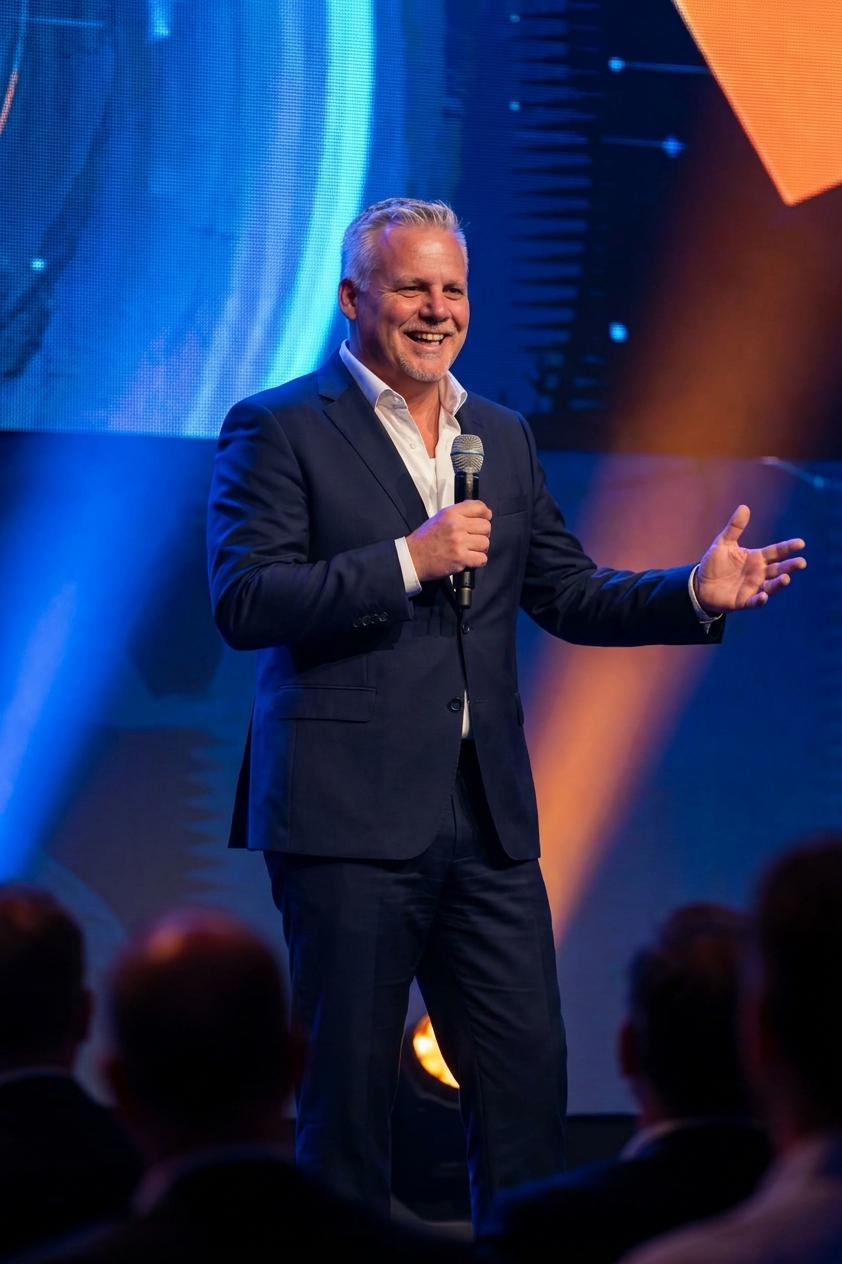
About Maik Schwede
Serial entrepreneur with 30+ years of experience. Founder of swing2sleep (254,000+ families), SoulPrint Kids and MS-Strategy Consulting. Trained auto mechanic, survived 14 years of insolvency, now a sparring partner for entrepreneurs and speaker. Lives in Cyprus and runs his business with a self-built AI assistant via voice message.